

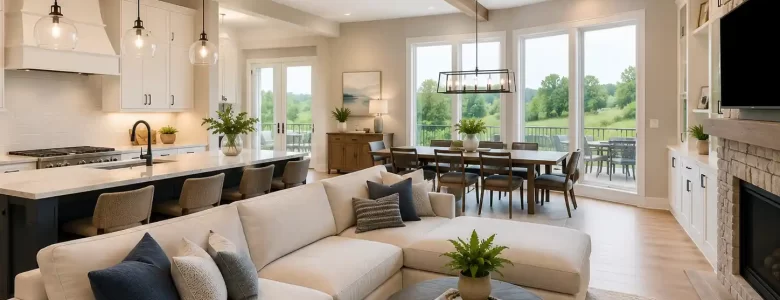
Open-concept floor plans remain one of the most popular features in custom homes, and for good reason. By combining the kitchen, dining, and living areas into one connected space, homeowners enjoy better sightlines, easier entertaining, and a greater sense of spaciousness throughout the home.
For many families building a custom home, the open living area becomes the heart of daily life. It is where meals are shared, conversations happen, holidays are celebrated, and memories are made. The key is designing the space so it feels both open and purposeful.
Start with How You Actually Live
One of the biggest advantages of building a custom home is the ability to create spaces that fit your lifestyle rather than adapting your lifestyle to the house.
Before selecting finishes or furniture, think about how the space will be used:
- Do you host large family gatherings?
- Do you need room for children to play nearby while meals are prepared?
- Would a dedicated homework station be helpful?
- Do you work from home occasionally?
- Do you want quiet spaces for reading or relaxing?
The answers often influence layout decisions more than square footage alone.
Create Defined Spaces Without Adding Walls
A common concern with open-concept designs is making large rooms feel organized and comfortable. Fortunately, architectural and design elements can help create natural separation while maintaining openness.
Popular options include:
- Large kitchen islands
- Ceiling treatments
- Area rugs
- Built-in shelving
- Fireplace focal points
- Decorative beams
These features help define individual zones while preserving the spacious feel homeowners love.
Design a Kitchen That Encourages Gathering
In many custom homes, the kitchen serves as the centerpiece of the entire living area. A thoughtfully designed kitchen island can create a natural gathering place for family and guests while adding valuable workspace and storage.
Popular custom kitchen features include:
- Oversized islands with seating
- Walk-in pantries
- Coffee bars
- Hidden appliance storage
- Contrasting cabinet finishes
- Quartz or stone countertops
These additions can improve both daily functionality and long-term enjoyment of the space.
Use Lighting to Shape the Room
Lighting is one of the most overlooked design tools in open living spaces. Instead of relying on a single lighting source, consider layering multiple fixtures to create visual interest and define different areas.
Examples include:
- Pendant lights above the island
- Chandeliers over dining spaces
- Recessed lighting throughout the room
- Accent lighting for built-ins
- Decorative sconces or floor lamps
Layered lighting helps large spaces feel warm, welcoming, and intentional.
Add Flexible Spaces That Grow with Your Family
Today's homeowners often want rooms that can adapt as needs change. Open floor plans offer opportunities to incorporate flexible living areas without adding unnecessary square footage.
Consider features such as:
- Reading nooks
- Homework stations
- Small home office areas
- Pet-friendly spaces
- Hobby corners
- Beverage or entertaining stations
These personalized touches can make a home feel uniquely yours.
Incorporate Storage from the Beginning
One challenge of open living spaces is managing clutter. Without adequate storage, even beautiful rooms can quickly feel crowded.
Planning storage during the design phase is often more effective than adding solutions later. Popular storage features include:
- Built-in cabinetry
- Window seats with storage
- Mudroom drop zones
- Walk-in pantries
- Hidden storage benches
- Floating shelves
Well-designed storage helps preserve the clean, open appearance homeowners are looking for.
Bring Warmth and Character into the Design
Because open spaces are larger and more visible, materials and finishes play an important role in creating personality.
Features that add warmth and visual interest include:
- Natural wood accents
- Decorative ceiling details
- Stone fireplaces
- Built-in bookcases
- Mixed textures and finishes
- Large windows that connect indoor and outdoor spaces
These elements help transform an open floor plan from a simple layout into a home with character.
Building an Open Living Space Around Your Lifestyle
The best open-concept homes are not designed around trends. They are designed around the people who live in them. Whether your priority is entertaining friends, spending time with family, enjoying retirement, or creating a flexible space that evolves over time, thoughtful customization can make a significant difference in how your home feels every day.
At Zeilman James Homes, we work with homeowners to create open living spaces that reflect their lifestyle, priorities, and vision. Whether you're choosing one of our floor plans or bringing ideas of your own, our goal is to help you build a home that feels personal, practical, and comfortable from day one.
If you're planning to build on your own land in the Greater Cincinnati and Tri-State area, contact Zeilman-James Homes to explore floor plans, customization options, and ideas for creating an open living space that truly feels like home.