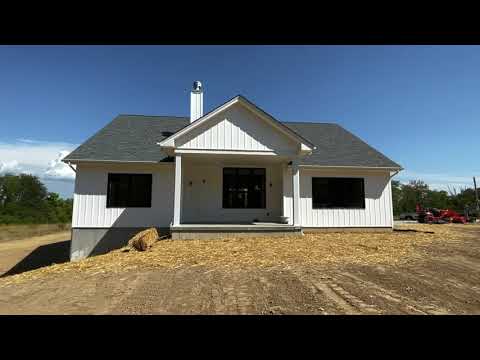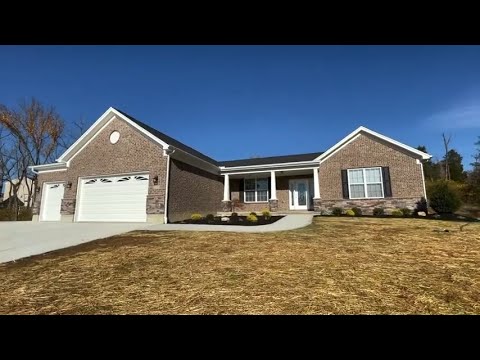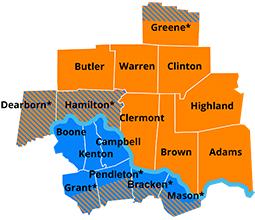
Brown County’s build environment is defined by two distinct settings: the Ohio River corridor (Ripley, Aberdeen, Higginsport) and the inland US-68 spine (Georgetown, Mount Orab area). Along the river, floodplain conditions and high-water history can materially affect site selection, finished-floor elevations, and whether a basement is practical. If a parcel is near the river or major tributaries such as Eagle Creek and Straight Creek, plan for early flood-risk screening and a drainage-first grading plan before finalizing foundation design.
Inland, the county transitions into a mix of farm ground and rolling terrain. This often means fewer municipal utilities and more reliance on private wells and onsite wastewater. In fact, most of the county does not have sanitary sewer service, so septic feasibility is frequently the schedule-critical item. A proper soil/site evaluation will steer system type, location, and the required reserve area; these constraints can influence driveway placement, garage orientation, and even the home footprint.
Permitting pathways can vary depending on whether your lot is within a village/city limit or in the unincorporated county. For typical single-family construction, you should expect coordination between residential building permitting/inspections and health-district wastewater approvals. If you are buying acreage with plans to split or create multiple lots, check subdivision/plat requirements early—access, frontage, and utility plans can trigger additional review.
Commuter reality matters here: northern Brown County sites near US-68/OH-32 can offer faster access toward the Cincinnati region than riverfront or far-southern locations, which helps when balancing land price, sitework complexity, and day-to-day drive times.
Ready to explore building here? Use our contact form to tell us about your land, preferred plan, and timeline, and we’ll follow up with the next practical steps.